A Refreshing Look Back
Metric vs Early Non-Metric Units of Measure
by Sandy Estabrook
and friend
While most of Europe’s coinage was metric, Britain’s monetary system, used until 1971, was non-metric and based on uneven divisions. A pound (£, or “L” for libra) was equal to 20 shillings, and each shilling was 12 pence, making 240 pence in a pound. Smaller fractional coins such as the halfpenny, farthing, threepence, sixpence, florin, half crown, and crown were commonly used. (Yikes!) Today a pound is 100 pence.
At first glance, this system seems complicated and it was. I remember have a hell of a time converting to dollars back in the 60’s. But it worked well for Britts growing up with their system because it allowed easy division into halves, thirds, and quarters. This reflects a broader historical pattern where non-metric systems favored fractional convenience over decimal simplicity.
The use of 12 and 60 as base numbers has deep historical roots. A “dozen” (12) is still common today in packaging and counting systems like beer and eggs. Even TIME reflects this legacy: 60 seconds in a minute and 60 minutes in an hour.
This measure came from the ancient Babylonian base-60 system (around 2000 BC), which was widely adopted because again, 60 divides evenly by many numbers including 2, 3, 4, 5, and 6. This made everyday fractions easier to manage in a pre-digital world. However its its roots go back even earlier to the Sumerians (around 3000 BC)
In recent times
The modern metric system, formally known as the International System of Units (ISU), was established in 1960. It is based on powers of ten, making it far more consistent and easier to use in science, engineering, and international communication. Unlike older systems, conversions in metric are straightforward and do not require memorizing irregular ratios.
The U.S. is one of the Last of Non-Metric Holdovers
While much of the world uses metric units, the United States continues to rely heavily on its customary system. This includes measurements such as inches, feet, yards, and miles (12 inches in a foot, 3 feet in a yard, and 5,280 feet in a mile). Weight is measured in pounds and ounces rather than grams and kilograms. Despite this, many international fields especially science and medicine along with, European football (soccer), and track and field rely on metric units. Another area where the US has ‘switched over’ is liquor measure with the Quart (32 oz) being replaced by the Liter (1000ml or 33.8 oz). The exception to this being Dairy (milk etc). Oh, a wine bottle for the most part has always been 3/4 of a liter 25.35 oz.
The One Giving folks the Most Trouble - Temperature
Temperature illustrates another key difference between systems. The Fahrenheit scale, developed by Daniel Gabriel Fahrenheit (Ne) in the early 1700s, sets freezing at 32°F and boiling at 212°F, creating a 180-degree range that is highly divisible. This made it practical for early calculations.
In contrast, the Celsius (Fr) scale used in the metric system is much simpler: water freezes at 0°C and boils at 100°C. This direct relationship aligns well with scientific measurement. In fact, many scientific definitions, such as the calorie, are based on Celsius—specifically it takes 1 calorie of heat energy to raise one cubic centimeter of water one degree Celsius.
If you were in France and the temperature was 22°C, that would translate into 71.6°F using the following formula.
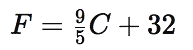
Lastly there is the Kelvin Scale, call it the coldest it can get anywhere in space. 0°K. It’s lowest point is - 273C or - 460F and used almost exclusively in science and astronomy. We are not going to go there.
What about Decimalized Time? Yes the French Tried it - No Joke !
Or imagine meeting your dinner date at 8:12.50?
The desire for consistent decimal systems even extended to time. During the French Revolution in 1793, France introduced a fully decimal time system. A day was divided into 10 hours, each hour into 100 minutes, and each minute into 100 seconds.
|
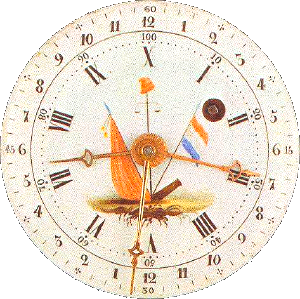
Although mathematically logical, the system failed quickly. People struggled to adapt, and traditional 24-hour clocks were already deeply embedded in daily life. After only a few years, decimal time was abandoned. You can get an idea of what Napoleon thought about this idea because in 1806, he officially abolished decimal time and restored the traditional 24-hour day.
Traces of this system still exist today in historical artifacts. Examples of decimal-time clocks can be found at the Louvre Museum in Paris and at the Smithsonian in Washington, to name a few. These serve as reminders that even logical systems must step aside for human behavior.
One More Thing - Fun Thing
This metric time thing intrigued me. I was wondering what it would look like in a digital clock format. I know what AI can do, so I asked ChatGPT to code me a digital clock of a 10 hour day, 100 minutw to an hour and 100 sec to a minute. It is below.
As a example, a typical 24 hour clock
9:00am Noon 12:45pm 4:15pm 7:30pm (dinner date)
The old French metric would be……
03:75:50 05:00:00 05:31:25 06:77:08 08:12:50
I can see why the French went nuts and Napoleon shut it down.