|
UPDATE 11/1/26: As a ardent Trekkie*, I’ll admit, I didn’t much like the Original Star Trek — TOS, (The Original Series for folks in the know). For me it was just too camp, maybe it was my age at the time it aired. That would be age 25. Still some of the TOS movies weren’t bad especially No. II The Wrath of Khan - often quoted as ‘Shatner’s Best’. But for me, Star Trek really began a couple decades (20 years!) later in 1987 with the Launch of Star Trek the Next Generation (TNG). During those twenty years science, technology, physics and movie production, made massive leaps forward enabling (TNG) to make use of some major creative thinking, pizazz and science fiction wrapped up in one show. Now add a classic Shakespearean actor Patrick Stewart (later to be knighted) as Jean-Luc Picard commander of the Galaxy Class Starship Enterprise NCC-1701-D and you have what is described by many critics and regular folks too, as the best Star Trek Series ever. I should add Video Formating was a little slow to catch up. It wasn't until 2012, TNG was rebuilt by CBS from film to HiDef digital. The details are here. In the movie Star Trek Generations (1994) both Shatner & Stewart appeared. Naturally warping time and jumping to another dimension was necessary making the movie, which was the perfect for “passing of the torch” story between the two generations of Star Trek. Finally, the motivation for this web page came about when I happened upon a podcast interview with William Shatner during the last week of October ’26 which is below. Then, only a day after, I heard of the passing of Sir Patrick Stewart. Wow, what a coincidence! I then dove deep into my computer archives found a page I made on TNG & DS9 back in 1998 highlighted by the voices of the latter two shows. Even today I’m impressed with myself for that page above. Following, are Biographies of TOS & TNG’s greatest men along with video highlights. *A Trekkie is a fan of the Star Trek franchise, or specific television series or films within that franchise. A Trekker is a person who person who takes liking Star Trek too seriously. |
|
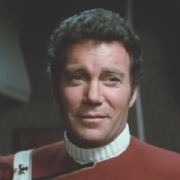
William Shatner A life of reinvention, from Montreal to the stars
William Alan Shatner was born in Montreal, Quebec, on March 22, 1931, and grew up in the English-speaking west end of Montreal in a Jewish family.His dad was a clothing manufacturer, his mom kept house. At a young age of about six or seven, his mother organized an acting class in their small basement which gave him an early taste of the stage. As a boy he played roles such as Tom Sawyer and Prince Charming. He made his professional acting debut at eight. He would later joke that the basement school taught the essential trade, “learn your lines, go onstage, say them, and get off again”. Shatner enrolled at McGill University and graduated in 1952 with a Bachelor of Commerce degree. His father hoped he might join the family clothing business, but the pull of theatre proved stronger. Shatner worked at Montreal's Mountain Playhouse and joined the Canadian Repertory Theatre in Ottawa before a formative invitation changed his prospects. In 1954, director Tyrone Guthrie brought Shatner into the new Stratford Shakespeare Festival in Ontario. There he learned classical stagecraft and took on demanding roles, including Henry V. He later said that the experience of Shakespeare, with its heightened language and large emotional gestures, became part of his acting instrument. The style that audiences would eventually associate with Captain Kirk, the emphatic pauses, the lifted intensity, the sense that every sentence mattered, had roots in the theatre. Shatner made his Broadway debut in 1956 in Tamburlaine the Great. He appeared in films and television dramas, including The Brothers Karamazov and Judgment at Nuremberg, and became a familiar face in the live-television era. One of his most memorable early screen performances came in the s1963 Twilight Zone episode* as a nervous airline passenger who sees a creature on the wing of a plane. The role gave him a chance to turn fear and disbelief into a tightly escalating performance. Then came Star Trek which premiered on NBC in September 1966. Shatner's Kirk was the Enterprise's decisive, risk-taking captain, a character who treated curiosity as a duty and diplomacy as a challenge worth attempting. Alongside Leonard Nimoy's Spock and DeForest Kelley's Dr. McCoy, he helped make the series' imagined future feel like a debate among recognizable people. The original series lasted only three seasons, ending in 1969, but reruns continue today of a devoted audience and made the cast cultural fixtures. The show's afterlife was not guaranteed. Shatner later recalled that when Star Trek was canceled he was so short of money that he could not cash a $15 check. He had three young daughters and was looking for work. The actor who had commanded a starship was, in practical terms, another out-of-work performer trying to make the rent.
Star Trek The Motion Picture, followed in 1979. Shatner then returned for six more feature films, directing Star Trek V: The Final Frontier. His best-known film performance may be in Star Trek II: The Wrath of Khan (1982), Played by Ricardo Montalbán where Kirk confronts age, regret, and the cost of command. The franchise made him an international icon. Shatner once said that he did not initially expect the show to become a permanent part of his identity. The public, however, has continued to know him as Kirk, even as his career kept moving. He later found his second act In T.J. Hooker (1982–1986), where he played a veteran police officer, a grounded contemporary role far removed from the starship bridge. He hosted Rescue 911, a real-life emergency series that helped bring stories of rescues and first responders into prime time. He also worked as a director, author, recording artist, and interviewer. His most celebrated late-career acting role arrived in 2004, when he began playing Denny Crane, a brilliant, vain, unpredictable lawyer who wore a gun, first on The Practice and then on its spin-off Boston Legal. The part gave him room to be comic, eccentric, and self-mocking. It earned him two Emmy Awards and a Golden Globe, and introduced him to viewers who knew him more as Denny Crane than as Captain Kirk. Shatner had found another signature character in his seventies, a rare second act for any performer. Shatner has three daughters Leslie, Lisabeth, and Melanie, from his first marriage to Canadian actress Gloria Rand. He later married three more times that latter being to Elizabeth Anderson Martin whom he married twice. He has spoken of grief, loneliness, and the effort of staying connected to family with unusual openness for a major celebrity. His close friendship with Leonard Nimoy, who played Spock, lasted decades later writing about their friendship and the pain of Nimoy's death in 2015. On one episode of the History Channel’s Pickers Show. Shatner let the boys stop by his LA home to do a little picking. He couldn’t have been more congenial. Away from acting, Shatner became a serious horseman and breeder of American Saddlebreds. A chance encounter with the horses at a show led him into a world that he found absorbing and technically demanding. He has competed, bred horses in Kentucky, and organized the Hollywood Charity Horse Show, which has raised money for children's and veterans' causes. The image of Captain Kirk in a saddle is not just a publicity curiosity: horses became a sustained part of his life. His other ventures have often been delightfully hard to predict. In 2006 he auctioned a kidney stone he had passed; the winning bid of $25,000 went to charity. Few performers would turn a medical misfortune into a fundraiser—and fewer still would make it sound like an ordinary anecdote. Jumping ahead to October 13, 2021, at age 90, Shatner flew aboard Blue Origin's New Shepard rocket on a brief suborbital trip, becoming the oldest person to travel to space. The coincidence was striking: the actor who had spent decades pretending to command a starship finally crossed the boundary between sky and space as a passenger. But the flight did not feel like a victory lap. More than a half century after Star Trek first aired, Shatner made it to space. After landing in the West Texas desert, Shatner was visibly overcome and told Jeff Bezos he hoped he would never recover from the experience. He had expected wonder and exhilaration; instead, the stark blackness of space beside Earth's thin blue atmosphere left him grieving for the planet's fragility. His emotional reaction became one of the most memorable moments of the flight. It also revealed a serious side of a man often presented as a comic personality: for him, the journey raised questions about life, death, and how briefly human beings share this planet. (more in the video below). Today and ten years my senior he Shatner turned 95 which brought both difficult news and new creative work. He and his daughter Melanie disclosed that they had faced separate stage-four cancers: Shatner had melanoma, and Melanie had breast cancer. By July, they said they were in remission or had no evidence of disease. This year also showed how little interest Shatner has in settling into a single legacy. As Star Trek marked its 60th anniversary, he was discussing new books and music, recording with country star Brad Paisley, and preparing a heavy-metal project.
In September 2026 he made a heavy-metal live debut at Chicago's Riot Fest at 95, performing with his band, The *uckers, and previewing an album titled What the F Is Heavy Metal? The spectacle is funny, but it is also entirely consistent with the career: Shatner keeps saying yes to projects that let him discover something new. Currently he is the executive-producer and hosting the History Channel documentary series The UnXplained which premiered 2019, and still ongoing as of Fall 2026. * I remember two episodes of The Twilight Zone. This was one of those. but never connected Shatner to it’s lead |
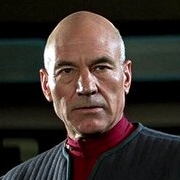
Sir Patrick Stewart From Mirfield to the Enterprise
Patrick Stewart was born on July 13, 1940, in Mirfield, a small industrial town in West Yorkshire, England. His mother, Gladys, worked in a mill; his father, Alfred, was a career soldier who had served in the Second World War and later worked as a postman. At school, his English teacher, introduced Patrick to Shakespeare and encouraged him to act. Stewart was about twelve when he began performing in school productions. He was captivated by the language and discovered that he could memorize long passages. At ten, he had imagined becoming a long-distance truck driver; acting was a possibility that other adults helped him see. He left school at fifteen, worked briefly as a local newspaper reporter, and spent more time attending rehearsals than writing stories. He later joked that the editor finally forced him to choose between journalism and acting. A scholarship took him to Bristol Old Vic Theatre School. His professional stage debut came in 1959 with the Lincoln Repertory Company, playing Captain Morgan in Treasure Island. In the early 1960s he worked in repertory theatre and television, steadily building the craft and the distinctive, resonant voice that would become one of his signatures. In 1966 Stewart joined the Royal Shakespeare Company, where he remained for about fourteen years. He was not an overnight star. He spent years in supporting roles and learned from a company that included some of Britain’s most respected stage artists. He played Mark Antony, Henry IV, Shylock, Oberon, Claudius, and many others, eventually becoming known for making classical language feel immediate and alive. Shakespeare was not simply a first chapter he left behind when television made him famous. Stewart kept returning to the stage throughout his life. He later played Scrooge in a solo version of A Christmas Carol, performed in repertory with his friend Ian McKellen in Harold Pinter’s No Man’s Land and Samuel Beckett’s Waiting for Godot, and finally took on Macbeth on Broadway in 2008. He had memorized Macbeth’s soliloquies as a teenager, decades before he played the title role. By the mid-1980s Stewart was an accomplished Shakespearean actor, but not a familiar face to American television audiences. At forty-seven, he was in Los Angeles for a short visit when he was asked to audition for a new science-fiction series, Star Trek: The Next Generation. He was initially doubtful. His friend, Ian McKellen, reportedly urged him to stay with theatre rather than accept a television role that might define him. Stewart took the job anyway, unsure whether the series would last. One of the best-known casting stories concerns his bald head. Stewart had lost his hair to alopecia as a teenager. The producers wanted to see him wearing a hairpiece, Stewart put it on, then took it off and made his case as himself. The studio ultimately accepted the bald Shakespearean actor—and the look became inseparable from Captain Jean-Luc Picard. The series premiered in 1987. Picard was not a copy of William Shatner’s Captain Kirk. He was a thoughtful French-born commander whose authority came from patience, discipline, scholarship, and moral judgment. Stewart brought the role the weight of Shakespearean training, but also a dry wit and flashes of warmth. The captain who could quote literature, negotiate with a dangerous adversary, or quietly challenge his crew became the emotional center of a new generation of Star Trek.
The new man in the U.S.S. Enterprise’s captain’s chair was no James T. Kirk who played his part as a rule-breaking lover and a fighter, Stewart was an erudite Brit who exuded raw authority and spoke with a sonorous baritone. How could this possibly work?
But it was a success and The Next Generation ran for seven seasons, from 1987 to 1994, and built its own audience while expanding the Star Trek universe. Its stories asked viewers to consider artificial intelligence and personhood, prejudice, war, diplomacy, and what a humane future might look like. Episodes such as “The Measure of a Man,” in which Picard defends Data’s right to be treated as a person, and “The Best of Both Worlds,” the two-part confrontation with the Borg, became touchstones for fans. Stewart’s commanding performance helped turn Picard from a role he had accepted cautiously into one of television’s most enduring captains. Stewart reprised Picard in four feature films: Generations, First Contact, Insurrection, and Nemesis. He later said he had thought he was finished with the character. When producers approached him about Star Trek: Picard*, he initially declined the part twice. What changed his mind was the promise that the series would move Picard’s story forward rather than simply repeat the old show. The series premiered in 2020, when Stewart was seventy-nine, and ran for three seasons which initially streamed on Paramount+. His return let the character age, reckon with loss, and enter a new phase of life alongside a number of familiar crewmates. Star Trek gave Stewart worldwide fame, but it did not limit his career. In 2000 he began playing Professor Charles Xavier in the X-Men films, another authoritative, bald character who used his abilities to protect others. The contrast between Picard’s starship and Xavier’s school for young mutants showed how readily Stewart could bring humanity and moral seriousness to fantasy and science fiction alike. He also worked in comedy, drama, animation, and voice acting. His work earned him three Olivier Awards, a Grammy for his spoken-word recording of Peter and the Wolf, and a Tony nomination for Macbeth. In 2010 he was knighted by Queen Elizabeth II for services to drama. The public image of Stewart as an imposing, serious authority figure was only part of his personality. He was also known among colleagues for humor, self-deprecation, and warm friendships. McKellen became one of his closest friends and, in a delightful reversal, officiated when Stewart married singer-songwriter Sunny Ozell in 2013. Stewart had two children, Daniel and Sophia, with his first wife, Sheila Falconer. His second marriage, to Star Trek producer Wendy Neuss, ended in divorce. In 2013 he married Ozell, who remained his wife until his death. In his 2023 memoir, Making It So, he wrote with candor about the complicated effects of his childhood, his family relationships, the unexpected turns in his work, and the opportunities he had been given. His decision to discuss the violence he witnessed as a boy was significant to him. Stewart explained that speaking publicly could help others understand the lasting effects of domestic abuse. He also continued to support human-rights causes and education, serving as chancellor of the University of Huddersfield for many years and as its emeritus chancellor. Stewart kept working well into his eighties, revisiting Picard, appearing at events, and reflecting on his life in interviews and in Making It So. His career linked two worlds that rarely meet so naturally: the classical stage and global popular entertainment. The discipline of Shakespeare shaped his Picard, while the captain’s popularity brought new viewers to the actor’s wider work.
“The Inner Light”, a quiet, emotional episode from season 5 was Stewart's favorite episode. The episode is about memory, love, and what it means for a life and civilization to be remembered. Stewart said he especially valued becoming “someone other than Jean-Luc Picard” in the story.
Sir Patrick Stewart died at his home in Los Angeles on October 28, 2026, at the age of 86. His family announced his death the following day, saying that he had experienced what they called a brief and poignant journey with Alzheimer’s disease and Lewy body dementia. His life began in a modest Yorkshire home and reached audiences around the world. For many, Picard will remain his defining role; for Stewart, the stage, Shakespeare, and the work of an actor remained just as important. Stewart's last recent interview Can be found here,
*Not to be confused with The Next Generation episode “Who Watches the Watchers?” (Season 3, Episode 4). The Mintakans mistake Picard for a god and call him “the Picard".
- - - - - - - - - - - - - - - - - - -
|
Since the passing of Patrick Stewart numerous biographical articles and YouTube videos
of remembrance by cast members and friends have been published about Jean-Luc.
We have chosen just one for its content and brevity.